March 2026 - The Stone Woman
Exploring the Last Days of the Ottoman Empire
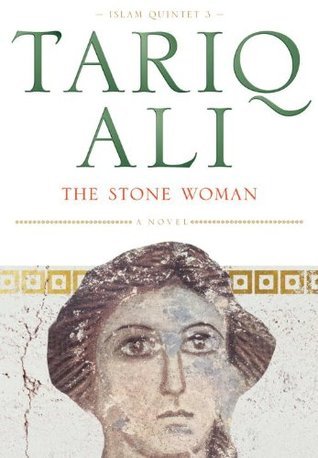
The Stone Woman is a historical novel by Tariq Ali, set during the waning days of the Ottoman Empire in the late 19th century. It was a small group of 7 that met to discuss the book at the RSGC.
At this time, Constantinople still reigned over vast regions, including Eastern Europe, North Africa, and the Middle East. The novel vividly brings to life the complexities and transformations of an empire on the brink of collapse.
The state of the Empire is depicted through the experiences and interactions of the aristocratic Pasha family, who have served the Ottoman Sultans as favoured courtiers for five centuries. Their fortunes rise and fall in tandem with the Empire.
In the oppressive heat of 1899, Iskander Pasha, a retired diplomat rendered speechless by a stroke, retreats with his family to their palace on an island in the Sea of Marmara. Accompanying him are his children: Salman, Halim (an army general), Nilofer (the novel’s central figure), and Zayneb. They are joined by Iskander’s brother, Mehmed, and Mehmed’s gay partner, an Austrian Baron. These gatherings become the backdrop for both political discourse and personal disclosures.
The family’s evening conversations offer glimpses into their personal histories, old rivalries, and persistent jealousies. They reminisce about the lost grandeur of the Empire and express their growing dissatisfaction with the Sultan’s weakening grip and the increasing influence of the clergy. The decline of power at the top mirrors the uncertainties felt within the family.
On the island stands a rock formation in the shape of a woman—The Stone Woman. This unique landmark serves as a confessional, where family members, and others, divulge their deepest secrets, frustrations, and regrets. Through these intimate revelations, the novel illustrates the cultural decay affecting both the family and the empire, highlighting how personal and political decline are intertwined.
Despite the overwhelmingly male-dominated society, the women of the Pasha family emerge as strong and independent figures. Nilofer, in particular, stands out for her wilfulness and autonomy. Her life choices—such as marrying a Greek schoolteacher and leaving her daughter in his care to pursue her own interests—challenge social norms and offer a nuanced view of cultural expectations within an Islamic society.
Ultimately, from the ruins of cultural and political decay, a new sense of Turkish nationalism begins to take shape. The novel suggests that this transformation paves the way for the rise of Kamal Ataturk and the emergence of modern Turkey.
Nazie Morad