June 2026 - Tatreez at IAMM
MCG tour through the Tatreez exhibition
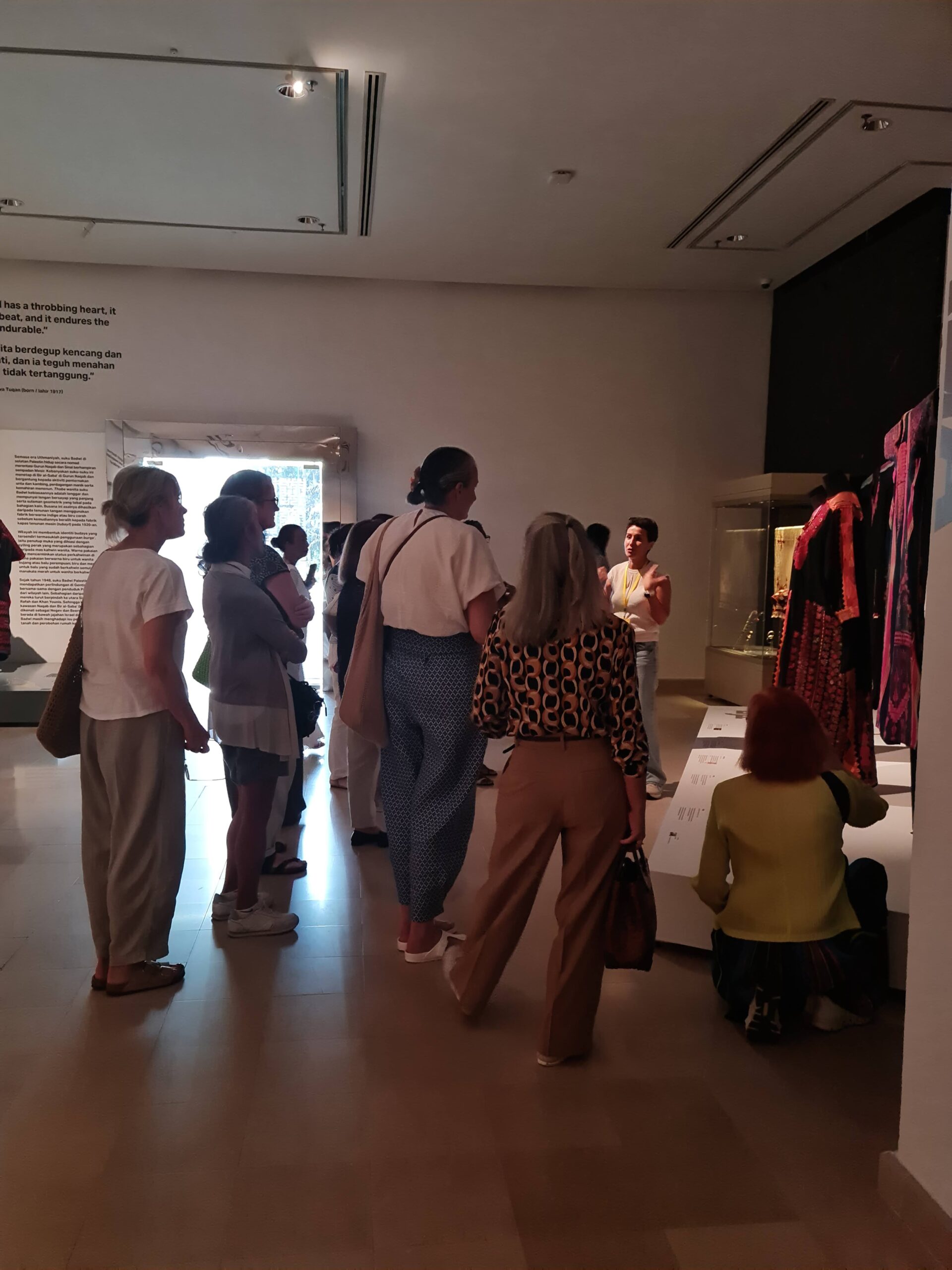
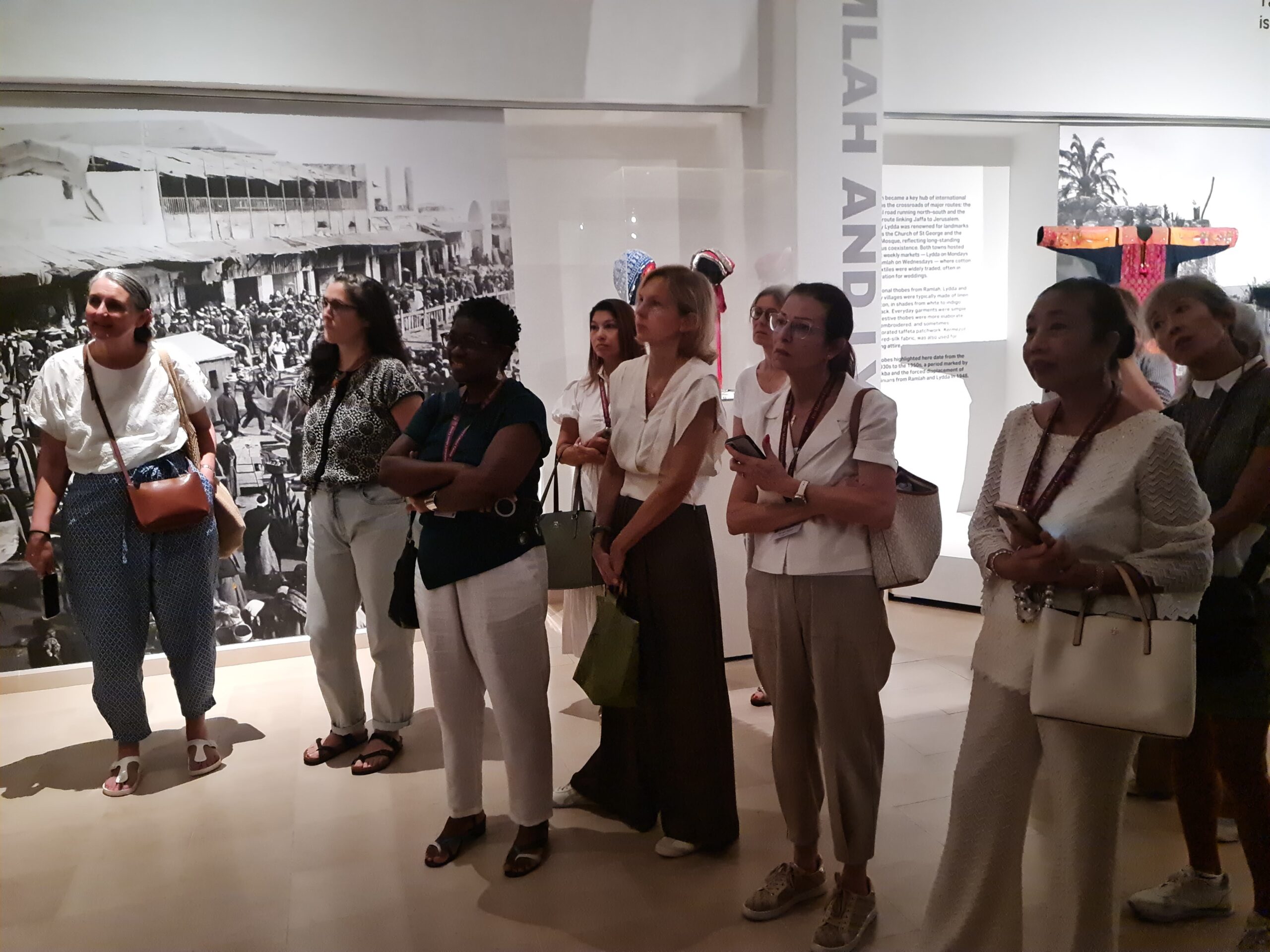
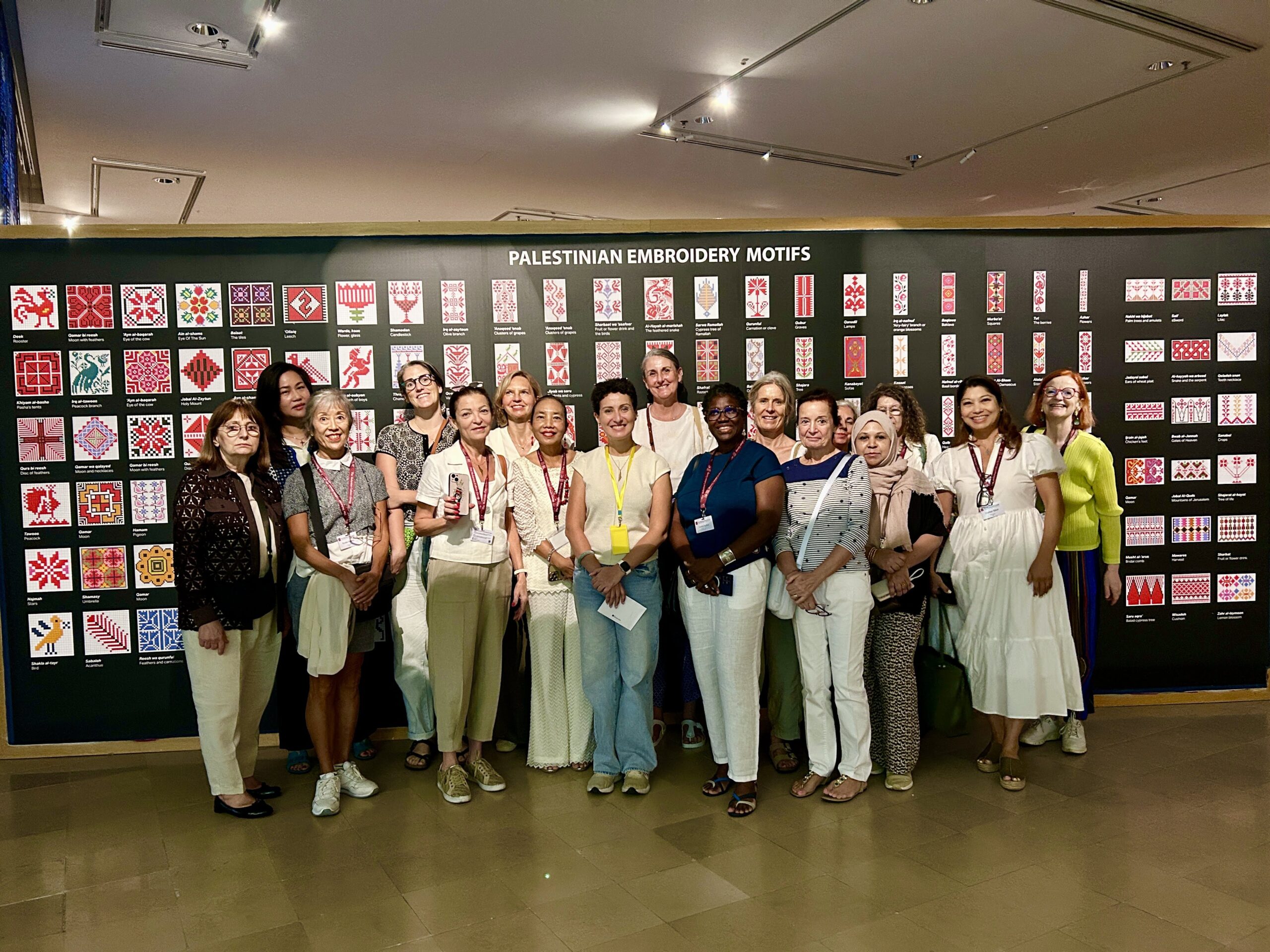
On Monday, June 22, 2026, 16 members of MCG gathered at the Islamic Arts Museum Malaysia (IAMM) for a deeply moving cultural journey. Our focus was the museum’s highly anticipated temporary exhibition, “Tatreez: Reclaiming Palestine through Embroidery”, which had just opened its doors on June 19, 2026.
Tatreez—the Arabic word for embroidery—is far more than just beautiful needlework. For generations of Palestinian women, it has served as a powerful, non-verbal visual language. Long before the historic displacements of the 20th century, the shifting colors, motifs, and textiles of a traditional dress (thobe) could instantly tell you a woman’s regional origin, social standing, and life milestones without a single spoken word.
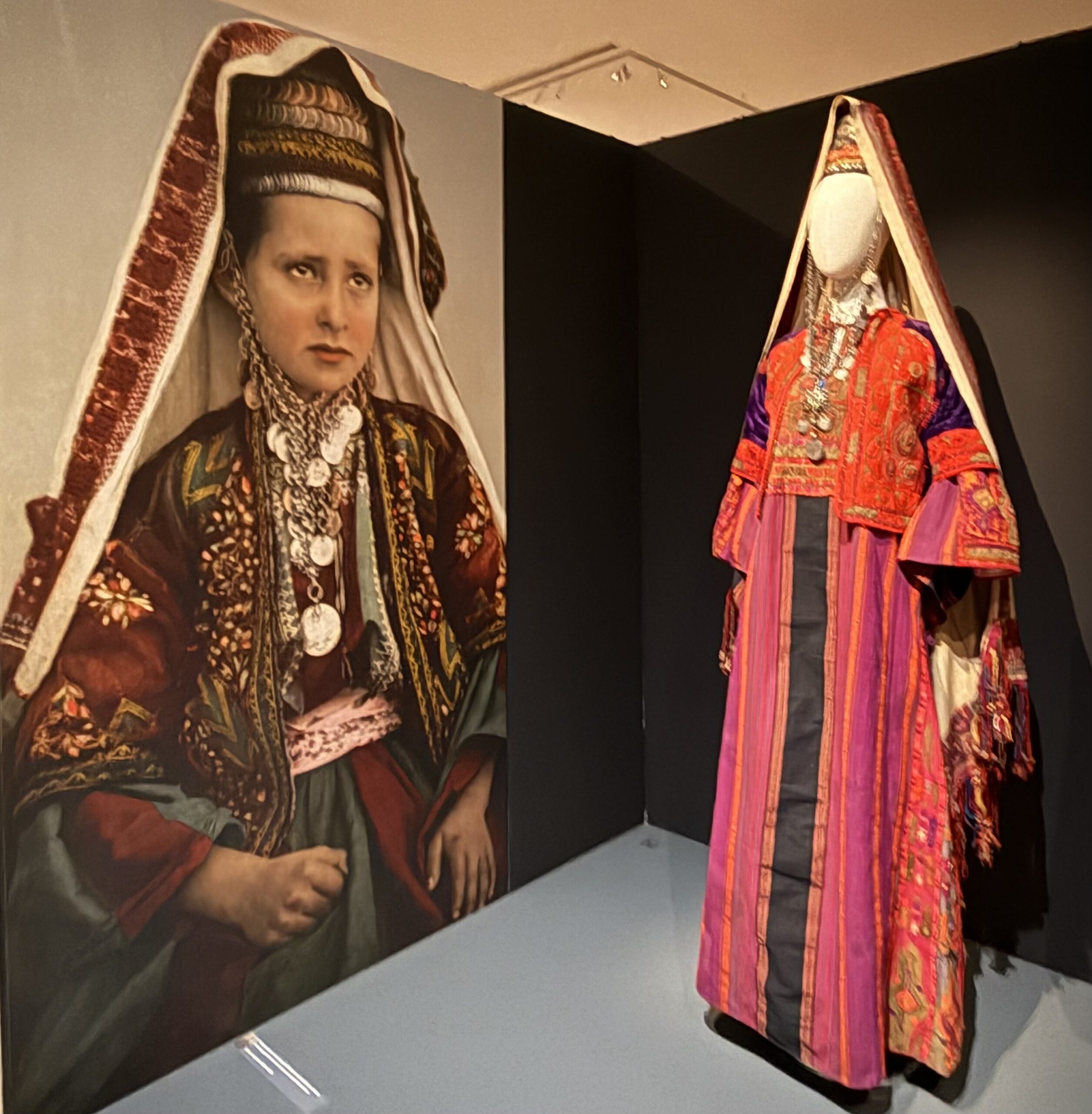
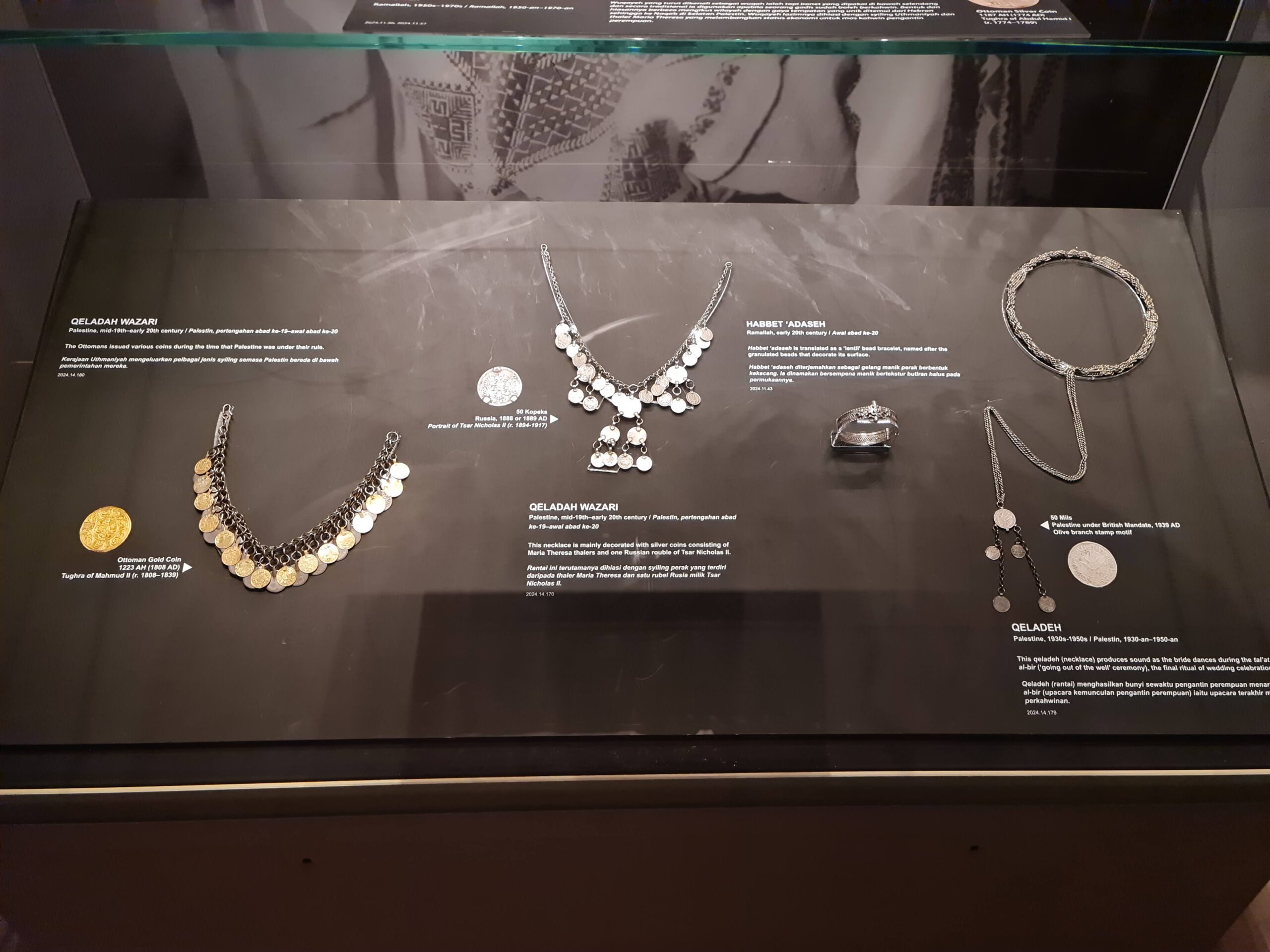
Drawn from the museum’s permanent collection, this beautifully curated exhibition brings together stunning historical costumes, intricate wedding garments, elaborate headdresses (like the shatweh and wuqayeh), and traditional silver jewelry. More than a showcase of masterly textile craftsmanship, the display stands as a profound testament to Sumud—the enduring spirit of rooted resilience, survival, and cultural preservation that continues to bind the Palestinian people across generations and geographic borders.
To fully appreciate this journey from ancestral history to contemporary resistance, our MCG group followed a curated path directly through the exhibition’s two dedicated spaces: beginning with the rich regional stories of Special Gallery 2, before concluding with the modern diaspora and survival networks highlighted in Special Gallery 1.
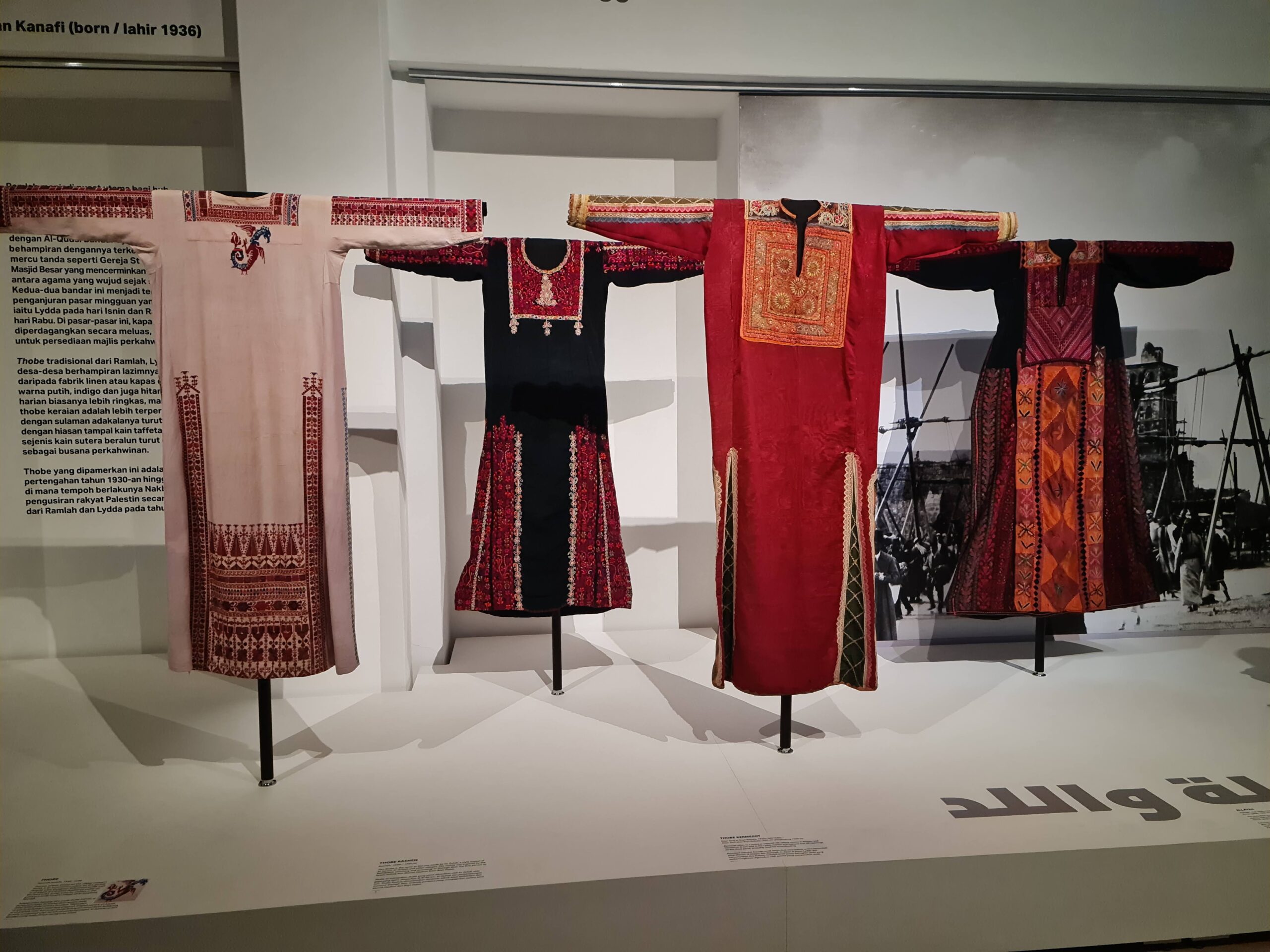
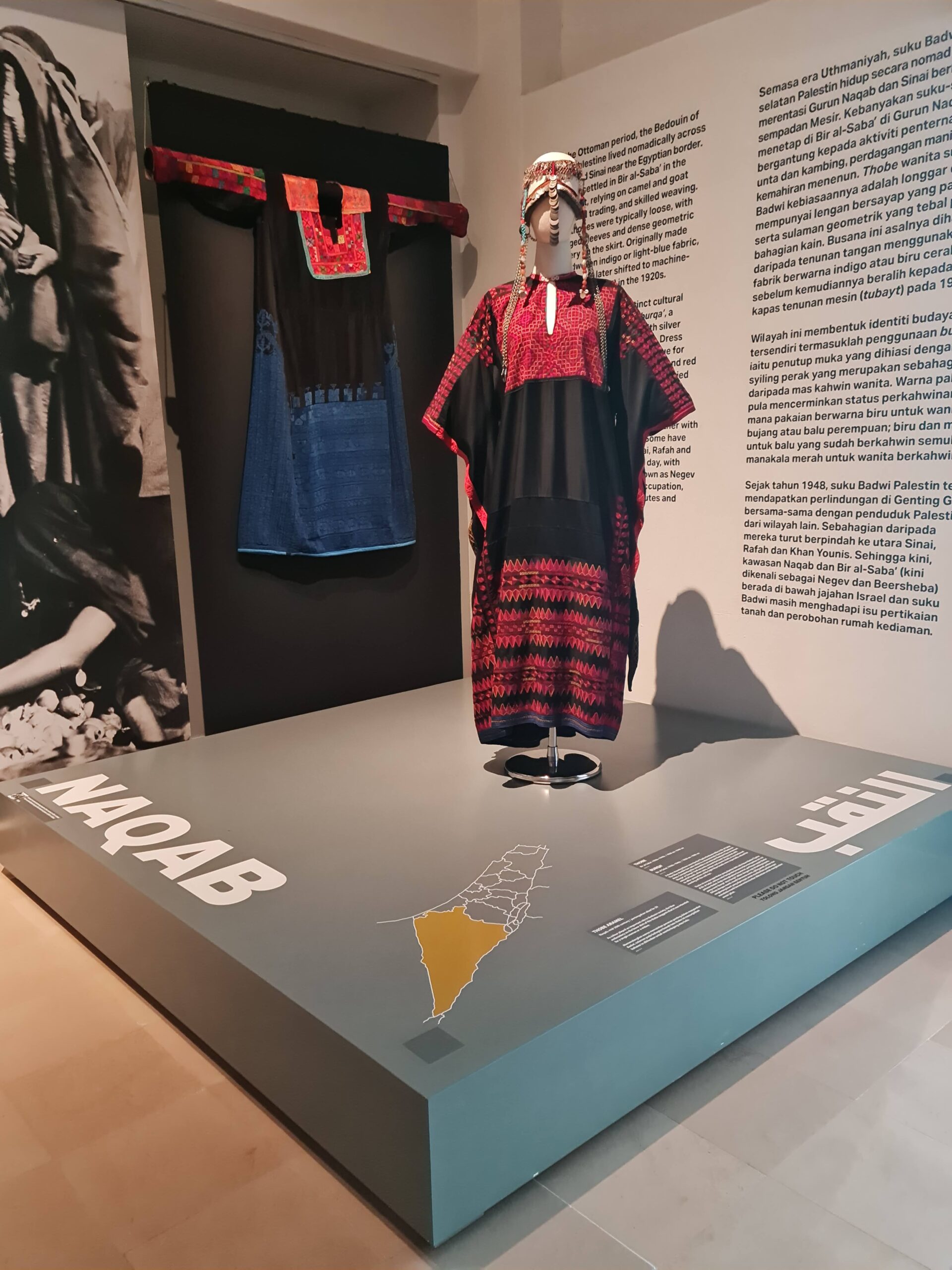
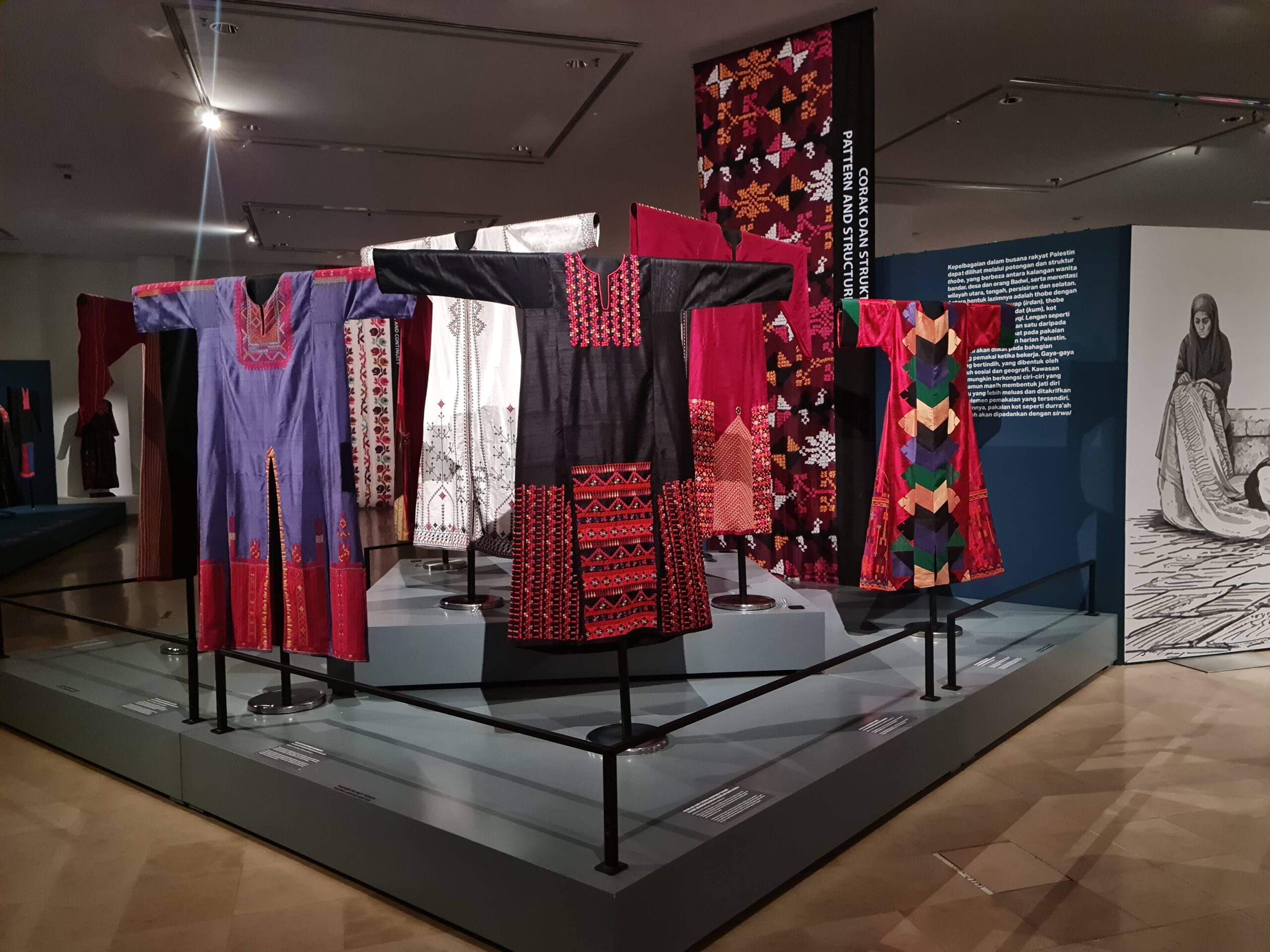
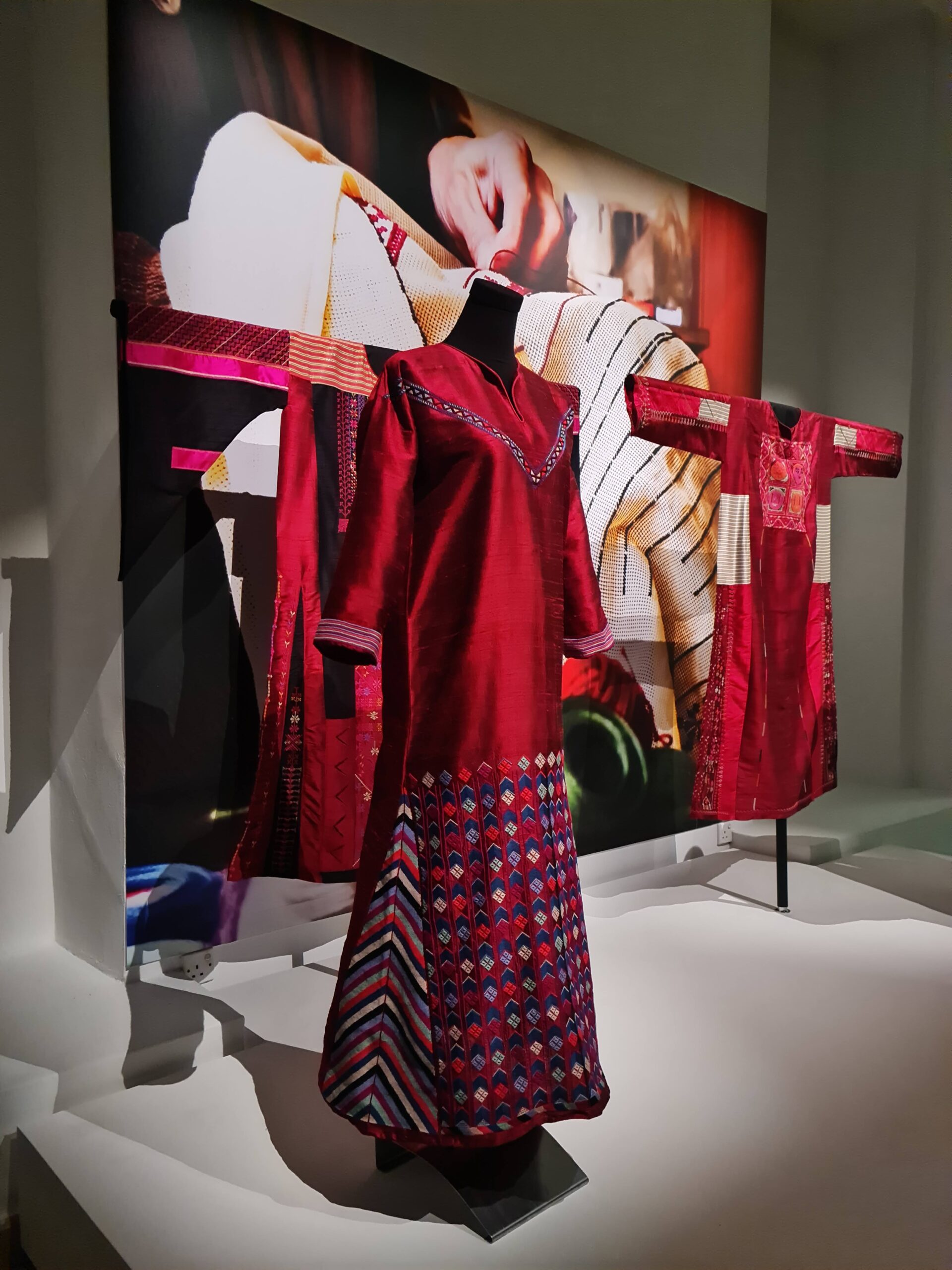
Part 1: Special Gallery 2 – The Historic landscape and regional vocabularies
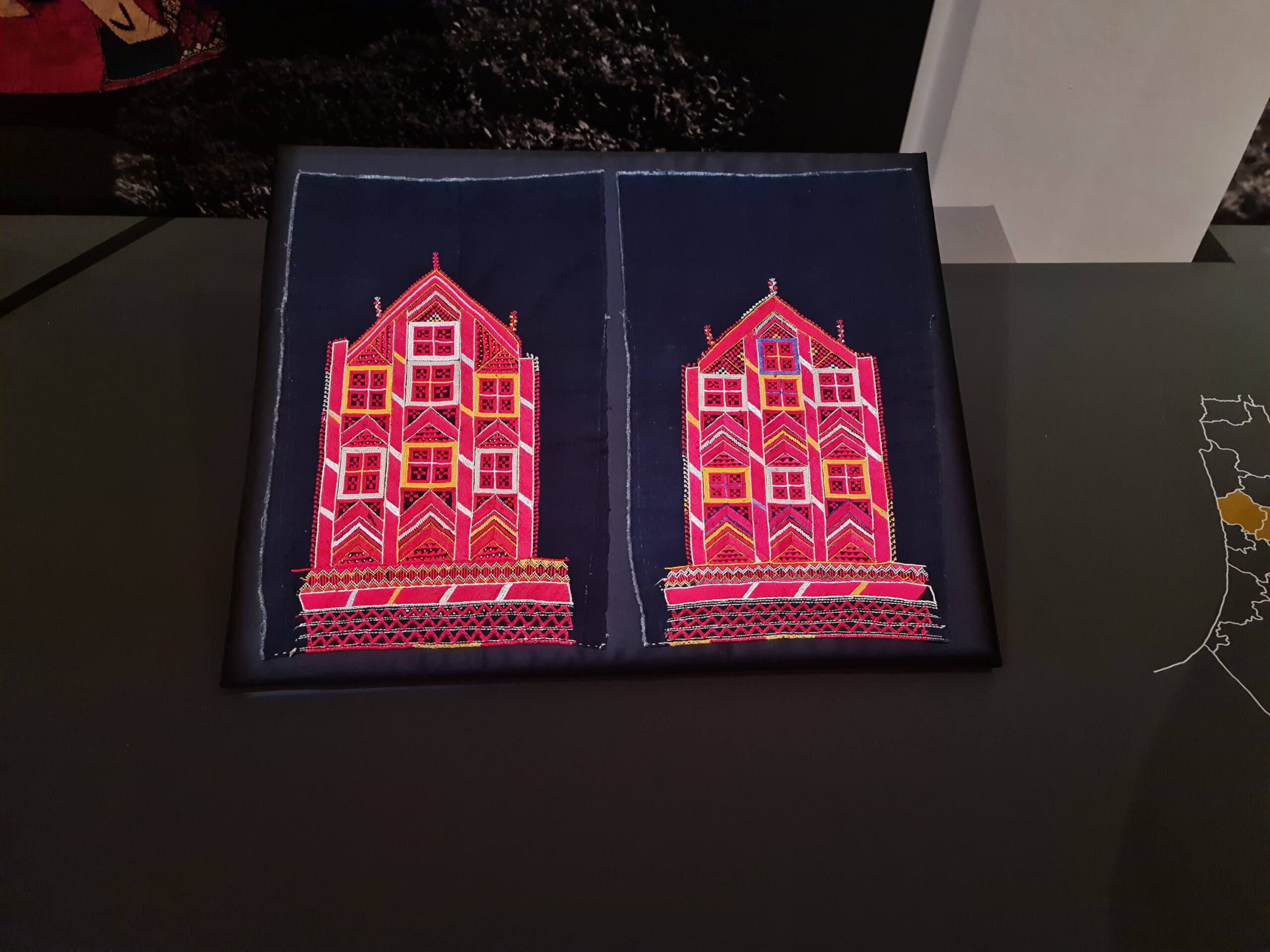
We began our tour in Special Gallery 2, which acts as a historical time capsule exploring the regional diversity of Palestine prior to 1948. As we learned from the curators, when we talk about a regional “style,” we are actually referring to a loose constellation of towns and satellite villages rather than strict, static borders. Each village possessed its own nuances, and every embroidering woman infused her garment with her own distinct identity and memory.
1. The Anatomy of a Thobe
Before diving into the regions, the exhibition helpfully introduces the anatomical architecture of the traditional thobe. To understand the placement of tatreez, we examined a structural layout detailing the key panels of the dress (image_21.png):
- Qabbeh: The prominent square chest panel, almost always the most heavily embroidered focal point.
- Radahah (or Radah): The shoulder yoke.
- Sawa’id & Kum: The top sleeves and lower sleeves.
- Banayeq: The long structural side panels running down the length of the dress.
- Shinyar: The back skirt panel, heavily decorated in central and southern regions.
- Mawaris (Qudam / Qafa): The front and back vertical seam furrows.
- Safayef & Toq: The cuffs and neck opening accents.
2. Northern Palestine: Galilee, Samaria, & Jenin
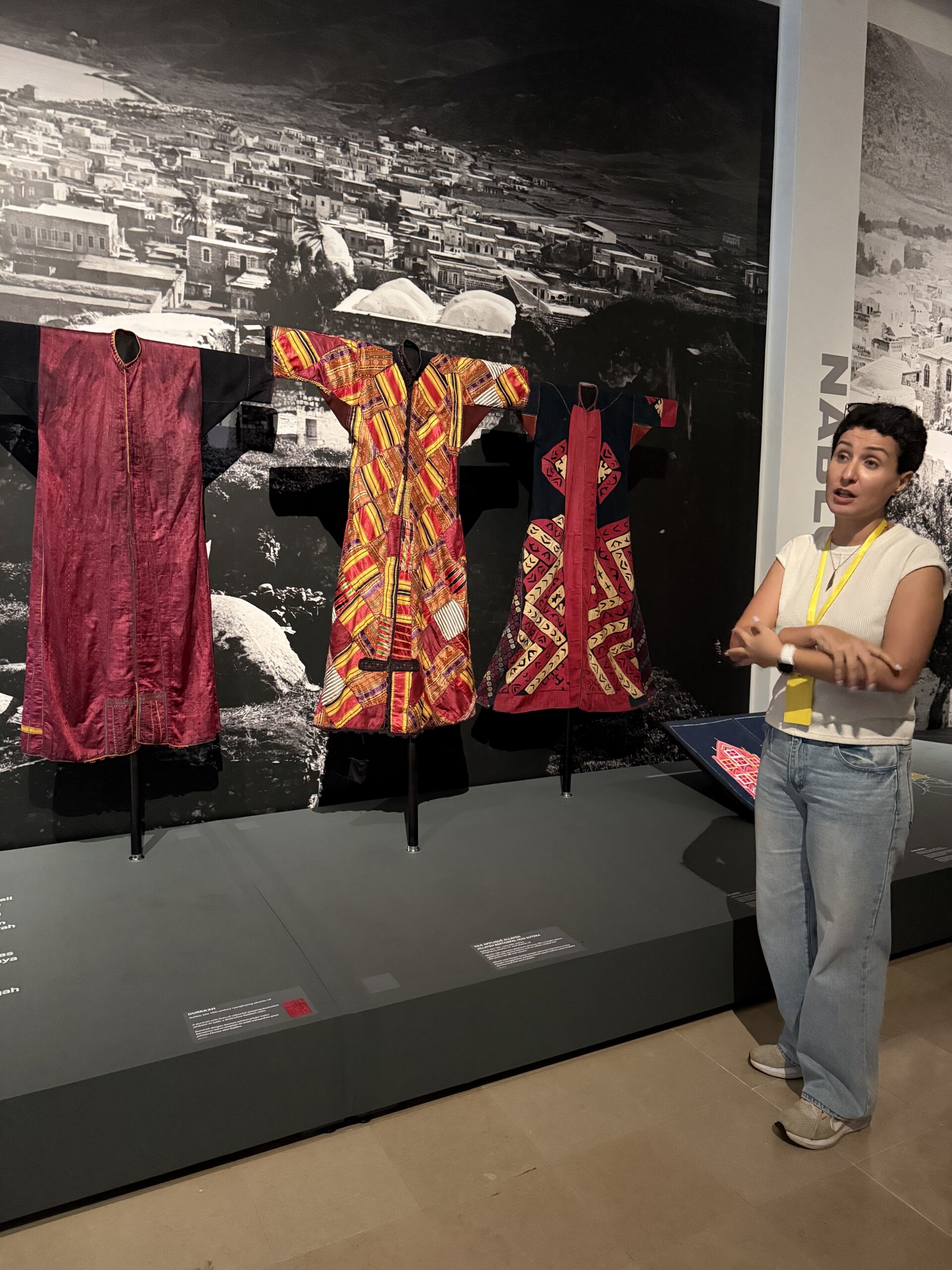
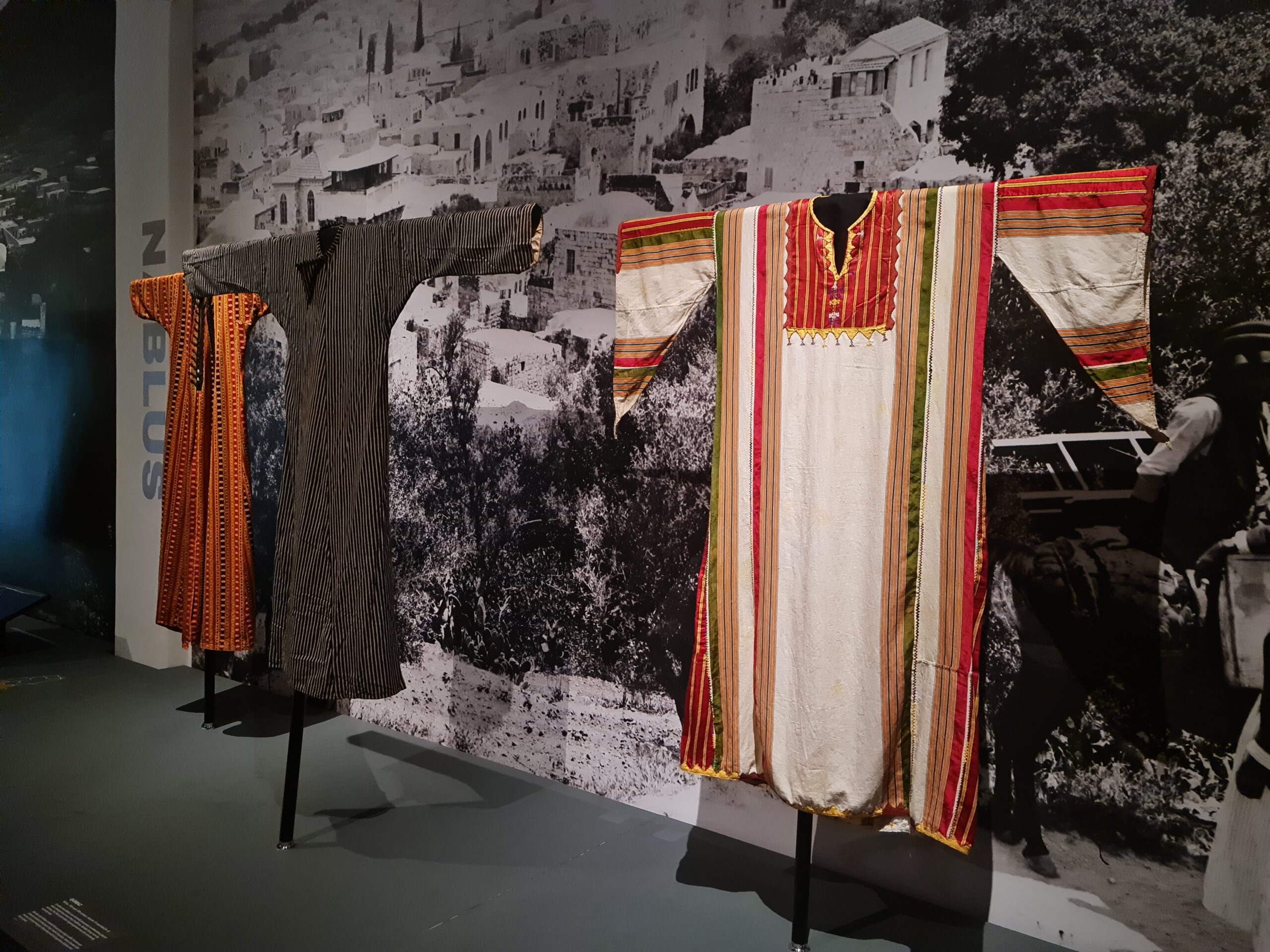
Our first major stop on the regional path brought us to North Central Palestine. Villages around Nablus, Jenin, Tulkarem, and Tubas historically featured much less elaborately embroidered dresses compared to the south. Instead, women wore a striking three-piece outfit consisting of a plain or minimally embroidered white thobe underdress, a colorful long open coat (durra’ah or qumbaz), and loose trousers (sirwal).
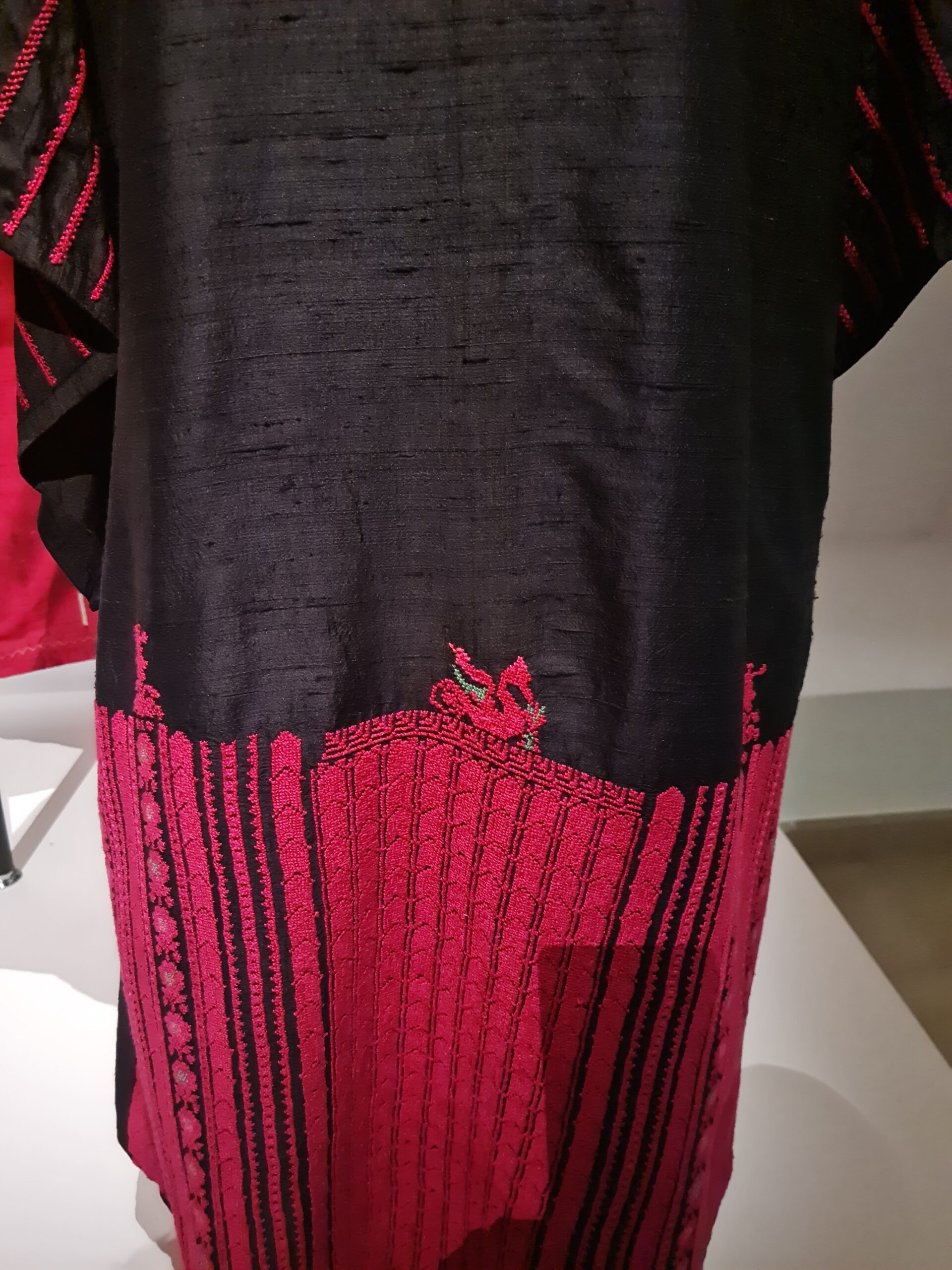
- Nablus & Tubas: Because Nablus served as a major textile trade hub with direct access to luxury imported Syrian striped silks at the Khan al-Tujjar bazaar, local women prioritized the intrinsic beauty and texture of the fabric itself over surface embroidery. We saw the famous Jannah wa naar (“Heaven and Hell”) dress from Nablus and Tubas, named for its vivid green (heaven) and red (hell) raw silk selvedge stripes, assembled with a loose zigzag joining stitch and sparse cross-stitching around the chest panel (image_22.png).
- Tulkarem & Jenin: Coats from this area feature simple couching embroidery around the neck opening in the Ottoman style (image_22.png). Historically, women in these agricultural zones worked tirelessly alongside their husbands in the fields, leaving them with very little leisure time to embroider or create family wealth to show off.
- Upper Galilee: An antique print (image_23.png) depicting the “Virgin’s Well at Nazareth” shows the traditional dress of Upper Galilee women. Their motifs were used quite sparingly, combining bright colors like pink, yellow, and purple thread. To optimize costly materials, the embroidery was put together in highly strategic ways using the manjal halal (loose zigzag joining stitch) to construct garments with far less thread than southern variations require.
3. Central & Southern Palestine: Jaffa, Ramallah, Bethlehem, & Jerusalem
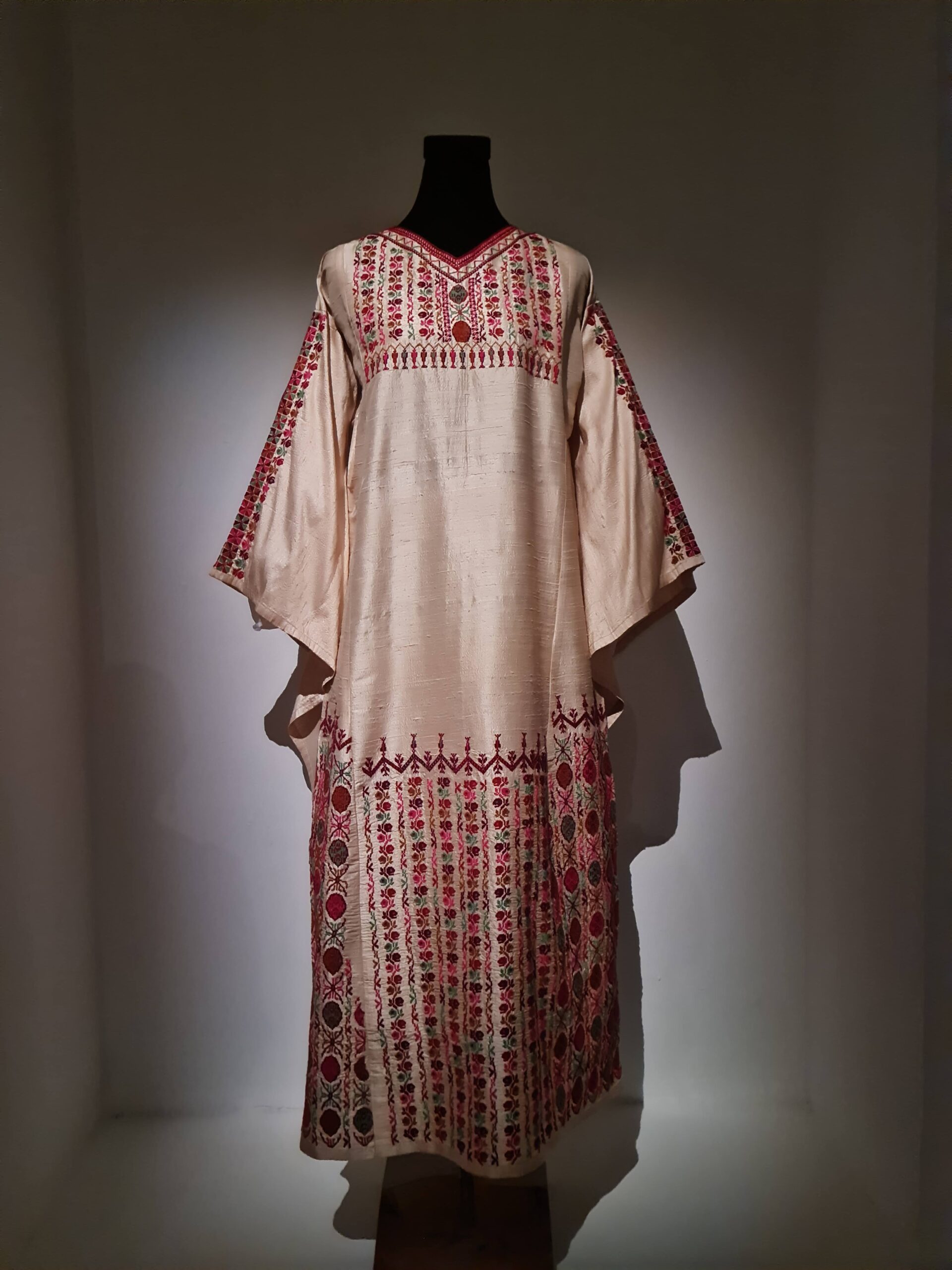
Moving further south, we observed a shift toward the highest quality, most distinct, and elaborate embroidery traditions that flourished in the late nineteenth and early twentieth centuries. Here, the thobe was an A-shaped tunic-like robe made of locally woven cotton or linen, and occasionally silk.
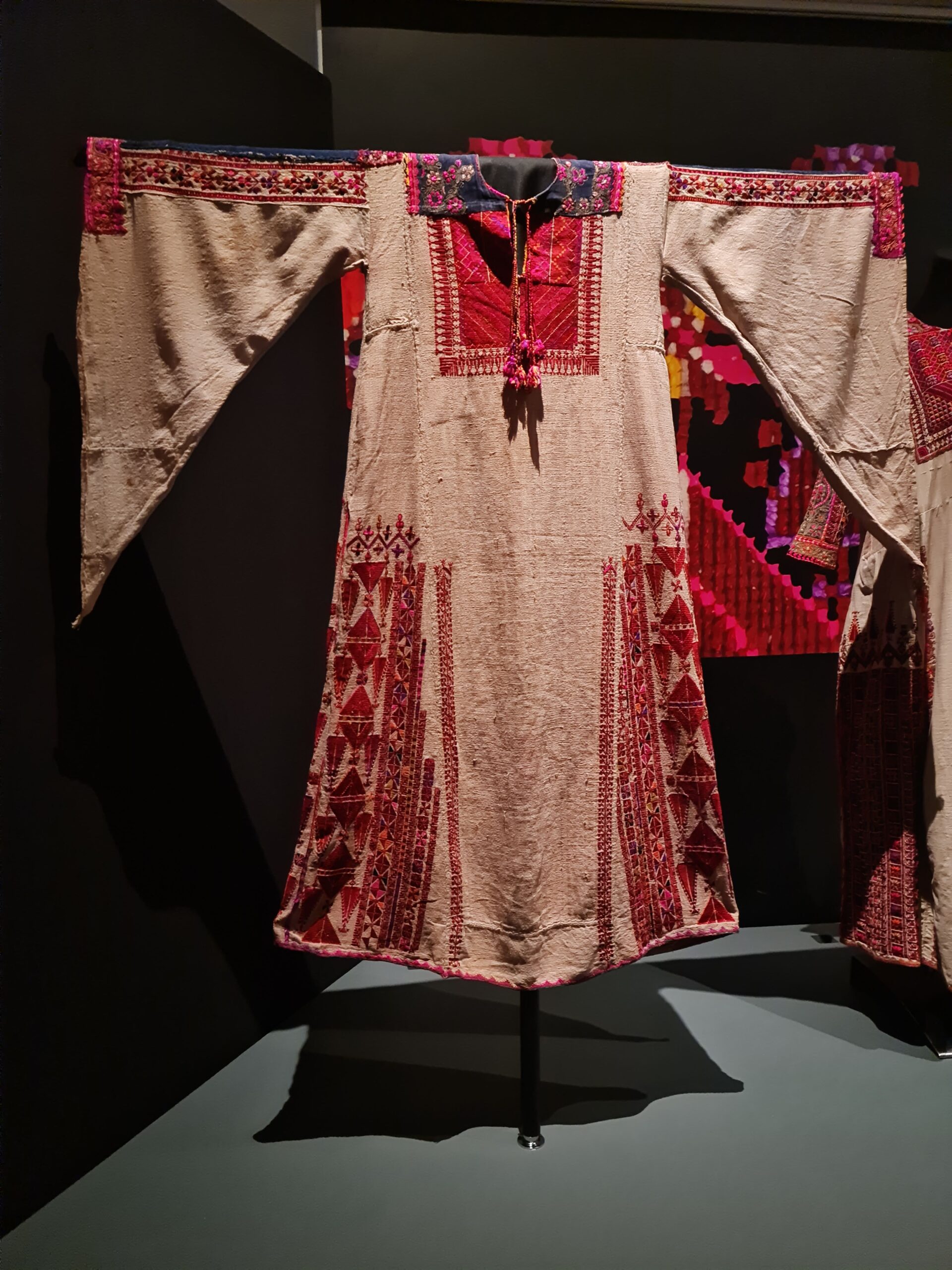
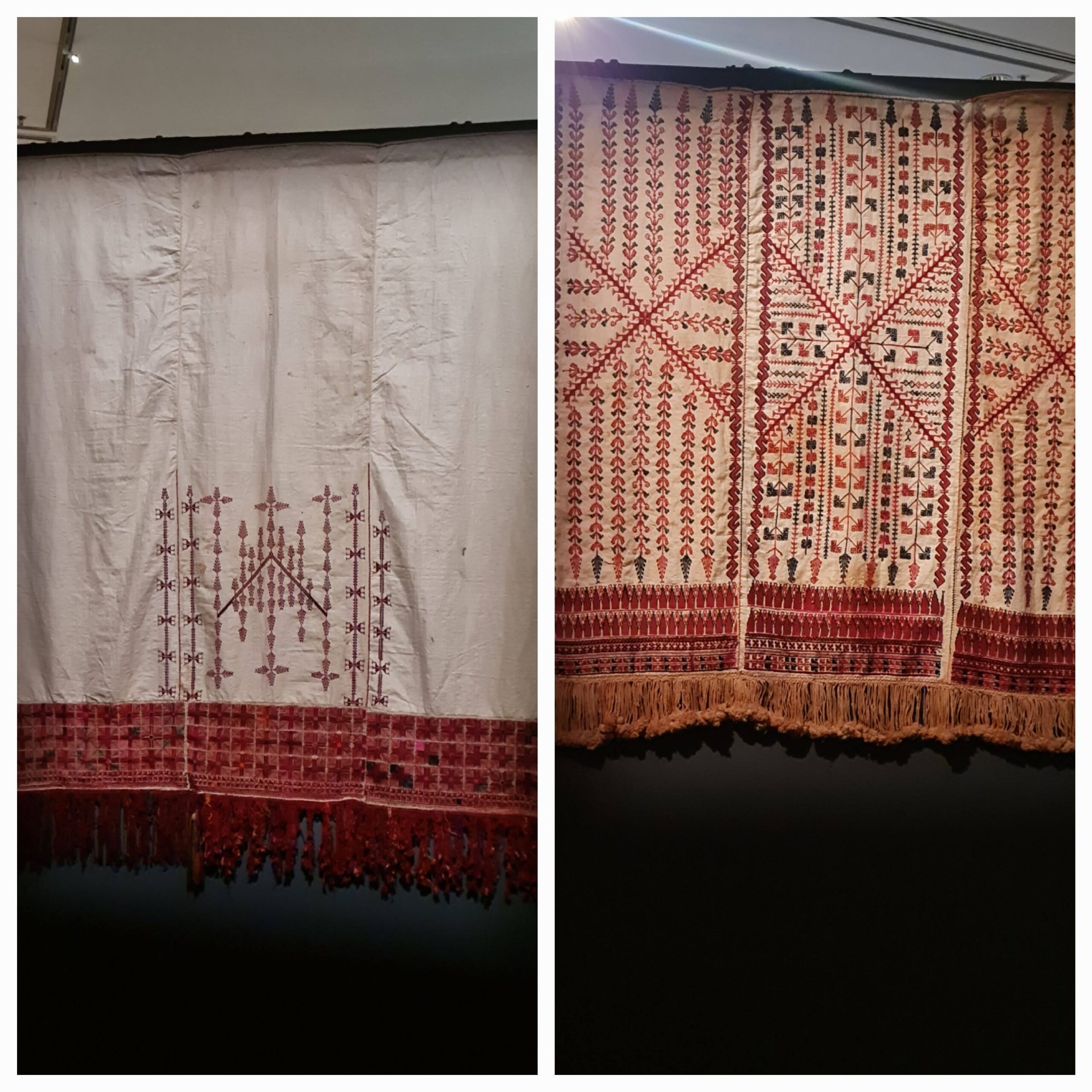
- Ramallah: Famous for its white handwoven linen (rumi) for daily wear or indigo-dyed black linen for special winter occasions, these garments feature exceptionally refined cross-stitch embroidery executed in deep red floss silk. We admired their defining local motifs, including the vertical “tall palm” (nakhel ‘aali) on the shinyar (back panel) and the S-shaped “leech” (‘ollaiq) framing the qabbeh (chest panel).
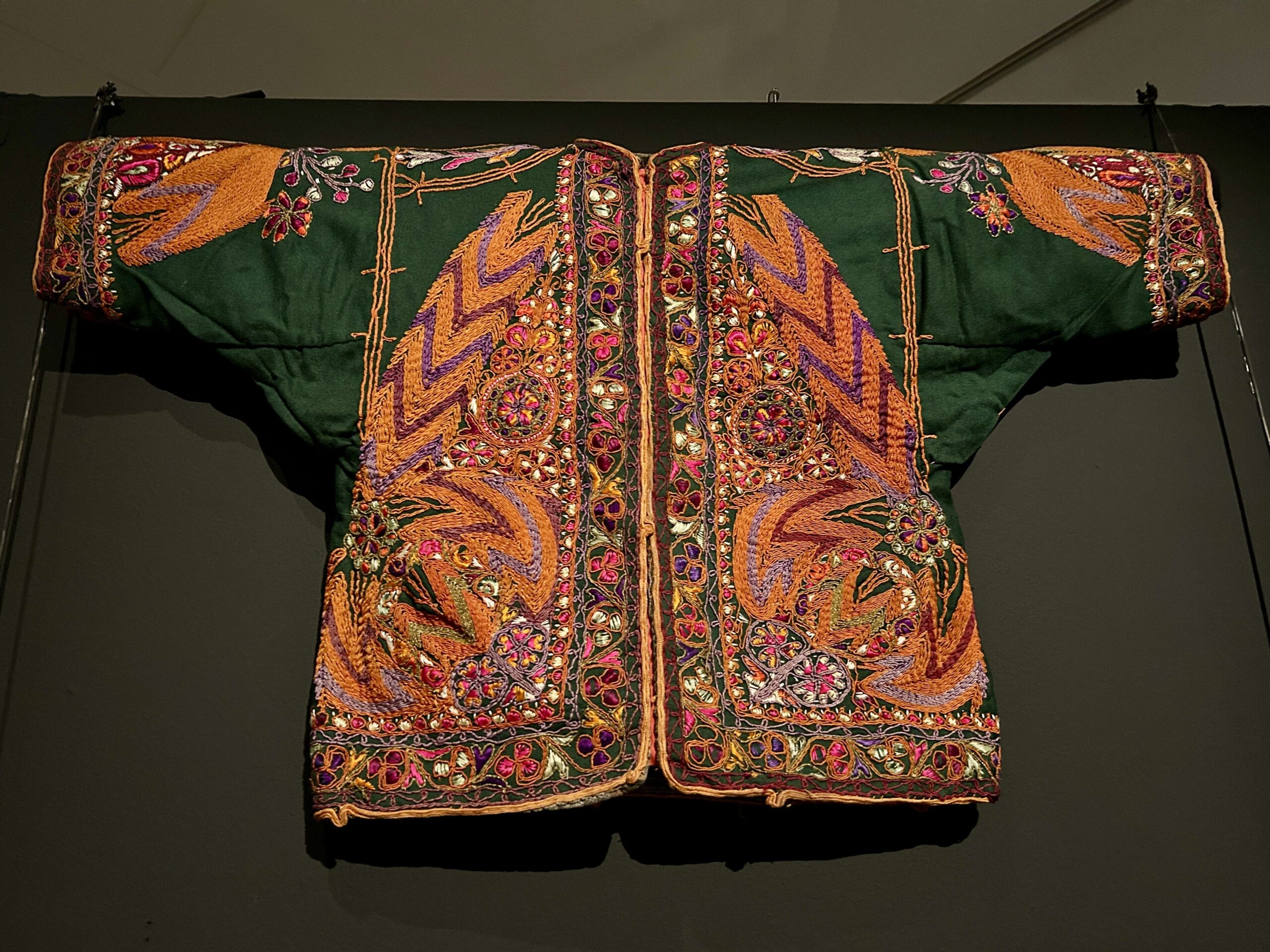
- Bethlehem & Jerusalem (Al-Quds): As the spiritual and cultural heart of Palestine, these sections revealed immense material luxury. Jerusalem styles, such as the striped silk thobe ‘atafi, paired seamlessly with the prestigious Bethlehem couching (tahriri) technique. This ornate style used gold or silver gilt-metal cords anchored with tiny silk stitches to create stylized floral medallion patterns, which texturally mirror the 7th-century mosaic mastery found on the Dome of the Rock.
- Jaffa & Bayt Dajan: Reflecting its history as a coastal gateway absorbing cosmopolitan styles, Jaffa’s nearby village of Bayt Dajan became legendary for white thobes featuring dense cross-stitched geometric motifs across the shinyar panel. These white dresses were beautifully detailed with patterns colloquially named “orange blossoms” as a proud nod to the region’s expansive citrus orchards.
- Gaza: Further down the coast, the exhibition honors Gaza’s legacy as an ancient premier weaving center. We learned about the distinctive Majdalawi fabric, characterized by its striking indigo and fuchsia stripes. Older dresses from both Jaffa and Gaza featured appliquéd front openings in the skirt, stitched in place with fine embroidery. The display notes that while the 1948 Nakba pushed this localized weaving industry to near-extinction, ongoing conflicts continue to threaten the survival of its final remaining master weavers.
4. Southern Bedouin Traditions (Naqab & Bir al-Saba’)
Our regional tour in Gallery 2 concluded in the vast southern expanses of the Naqab, where Bedouin embroidery styles diverge completely from the agricultural villages. Here, the central front panel of the skirt was almost never embroidered, except for appliquéd pre-embroidered strips. Color choices communicate a woman’s place in society: brilliant red cross-stitching belongs to married women of childbearing years, while distinct blue embroidery denotes unmarried girls, widows, or periods of mourning. Hems are flawlessly finished using the kefafah—a double-bar satin stitch unique to the desert tradition.
Technical Breakdown: Stitches as Artifacts
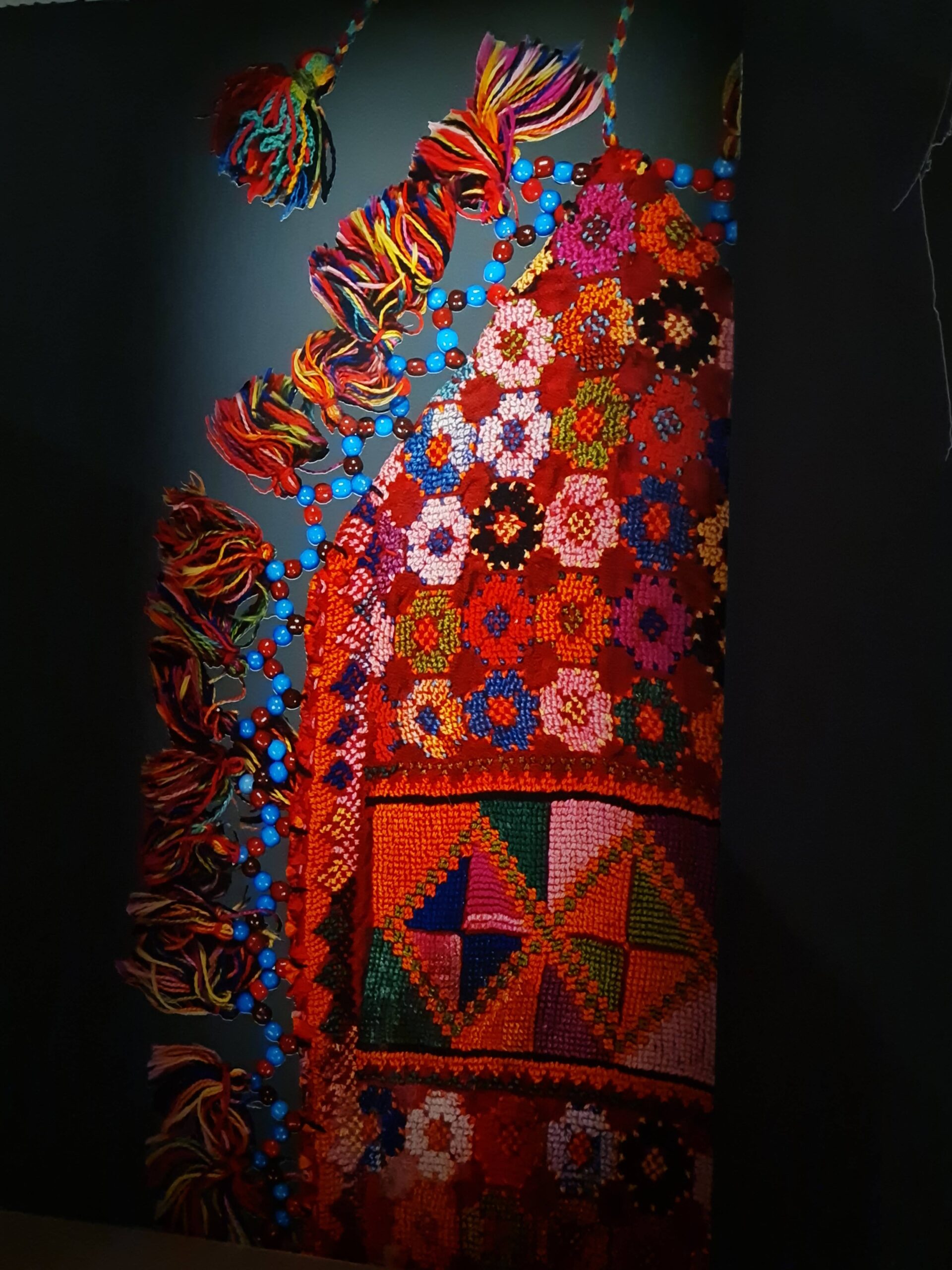
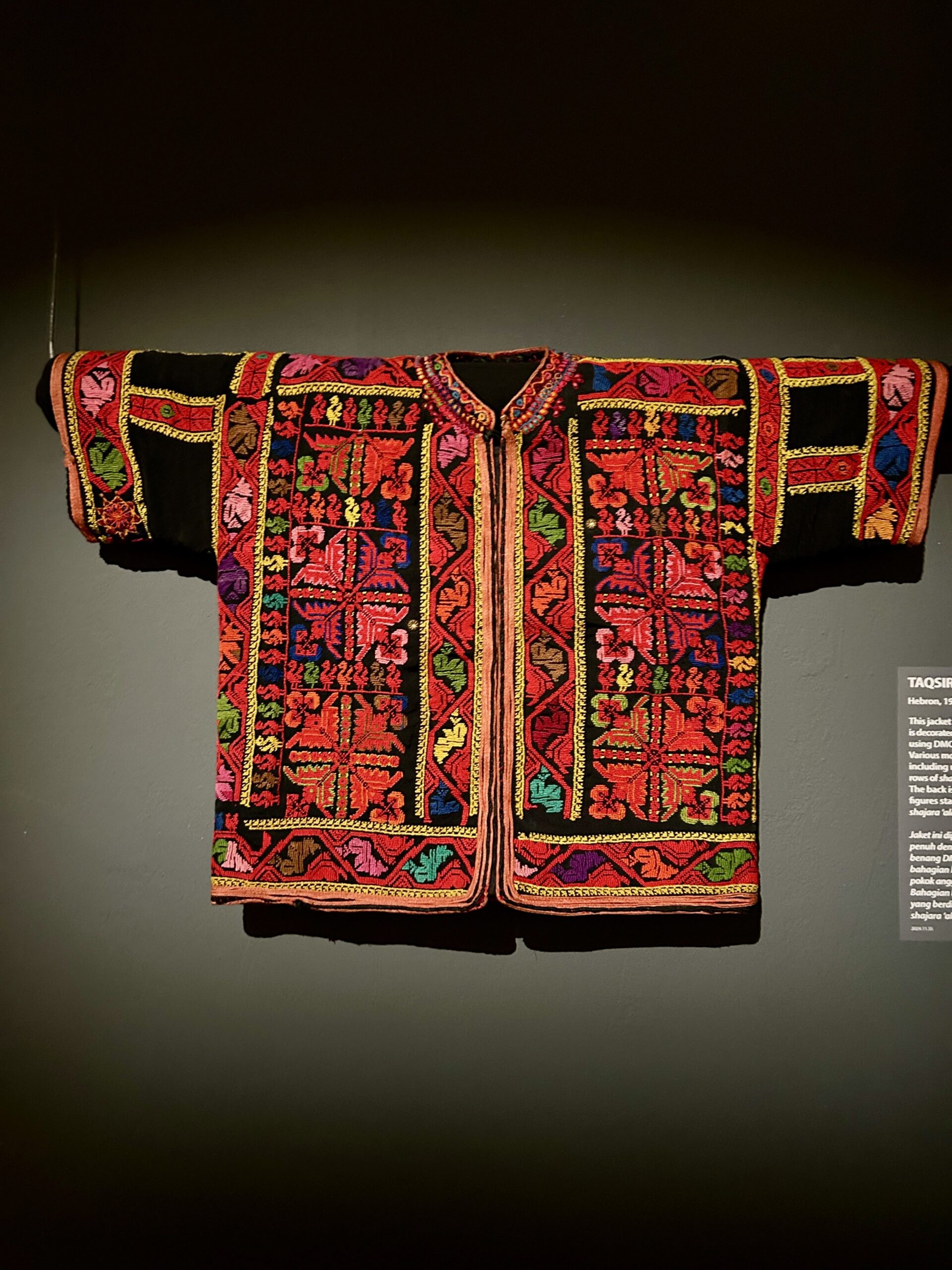
Interwoven between the regional displays were educational showcases breaking down the exact grammar of the needlework (image_13.png, image_14.png):
- Qutbeh Fallahi (Cross-Stitch): The primary decorative technique across Palestine, distinct for its texture-building X-shaped stitches.
- Tahriri (Couching): Metallic or silk cords laid down and anchored in relief for ceremonial wear.
- Tihshai (Satin Stitch): Flat, parallel filling stitches used to create vibrant, block-colored flora and fauna motifs.
- Manjal (Plait Joining Stitch): A decorative, sickle-shaped interlocking stitch used to structurally connect separate fabric panels seamlessly.
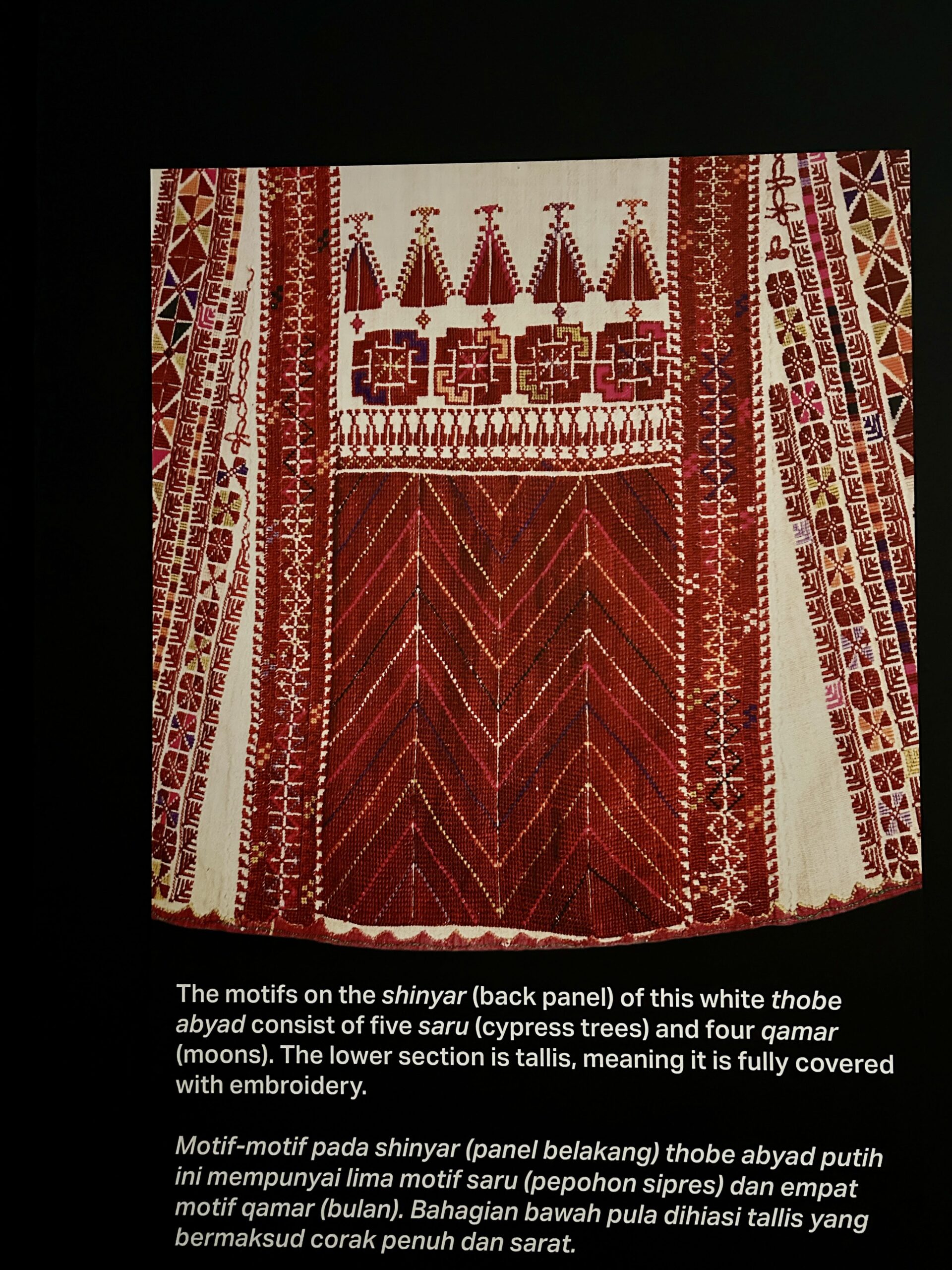
Part 2: Special Gallery 1 – Continuity, Innovation, and the Global Diaspora
After immersing ourselves in the rich historic geography of the land, our MCG group ascended into Special Gallery 1, where the narrative shifted to contemporary sensibilities, global continuity, and organized socio-political survival.
In this space, display panels outline how the meaning of the thread shifted permanently after the 1948 Nakba. Following the catastrophic events of mass displacement, tatreez was transformed from an intimate, localized practice of rural dressmaking into a collective symbol of nationhood, resistance, and memory.
When physical land was targeted, the cloth itself became a portable homeland. As highlighted by Omar Joseph Nasser-Khoury on the gallery wall, amidst systemic hardship and existential crises, the craft represents the “quiet, persistent and repetitive rituals of resilience that endure”. It encodes the identity of destroyed villages directly into the garments of the displaced, turning every stitch into an act of defiance and survival.
Gallery 1 also highlights how this spirit of resilience was organized into vital survival networks within diaspora refugee camps. We learned about pioneering initiatives like INAASH (the Association for the Development of Palestinian Camps), founded in Lebanon in 1969.
In refugee settings, INAASH and similar collectives institutionalized the production of embroidery. This offered a crucial double lifeline: providing essential income-generating opportunities for struggling single mothers and displaced women, while systematically documenting and safeguarding complex regional patterns that were at risk of being erased by displacement. Through INAASH, an inalienable domestic craft was elevated into a formal vehicle for socio-political resistance and economic self-sufficiency.
The final section of Gallery 1 demonstrates how traditional motifs and regional styles are reinterpreted today with contemporary sensibilities. Modern thobes created in 21st-century refugee camps stand as testaments to cross-border cultural continuity, proving that the craft remains firmly rooted in identity and belonging. Through these efforts, threads of the past are woven directly into the present, allowing current generations to maintain an unbreakable connection to their heritage.
As our tour concluded, the deep connection between the two galleries became completely clear to all of us. By pairing the rigorous historical geography of Special Gallery 2 with the modern survival stories and diaspora initiatives of Special Gallery 1, the Islamic Arts Museum Malaysia underscores a vital truth: a stitch is never just an ornament. It is a document of ownership, an act of preservation, and a beautifully resilient archive of a culture that refuses to be forgotten.
The exhibition “Tatreez: Reclaiming Palestine through Embroidery” runs daily at the IAMM until April 25, 2027, and it is a highly recommended experience for anyone seeking to understand the deep intersections of Islamic art, textile history, and human resilience.