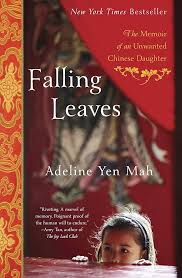
May 2026 - Falling Leaves
Falling Leaves by Adeline Yen Mah
A universal autobiographical story about resilience and overcoming emotional abuse, yet firmly rooted in Chinese culture.
The eight attendees had mixed feelings about this book. Some found it difficult to read about Adeline Yen Mah’s painful childhood, and most did not enjoy the writing style. At the same time, however, we found it fascinating to follow the various family members and observe how differently they responded to the toxic influence of their stepmother, Niang.
Our reflections centred on the question of what personal experiences or insecurities may have shaped Niang’s mean-spirited, manipulative and materialistic behaviour. This led to some armchair psychological observations about the other family members, which gradually developed into a discussion about the relative influence of nature and nurture. The conversation also raised the question of whether culture may be an equally, or perhaps even more, powerful force in shaping individuals, particularly those who have experienced challenging childhoods.
Although we did not particularly enjoy the book from a literary perspective, it remained a powerful read because of the author’s honesty and remarkable emotional and intellectual strength. Education gave Adeline financial independence, though perhaps not complete emotional freedom. We all admired the character of Aunt Baba most. Independent, feminist and inspirational, she served as an important role model for Adeline. In contrast, most of the other siblings appeared to choose financial security over independence and remained relatively flat characters, showing little personal growth throughout their lives.
We were also struck by the weak position Adeline’s father occupied within the family. By consistently deferring to his second wife, he failed to protect his children. Through the deliberate favouring of some family members and exclusion of others, Niang maintained a firm financial—and therefore emotional—hold over much of the family.
We particularly appreciated the way Yen Mah interwove Chinese history and culture throughout the narrative. Each chapter begins with a Chinese proverb, offering non-Chinese readers a deeper understanding of Chinese philosophy and values. The proverbs also serve to reinforce the emotional lesson or theme explored in each chapter.
Many thanks to Charlotte for hosting and for the delicious lunch afterwards, especially the memorable apple crumble bites.
Review with thanks to Renet Korthal Altes